
Notificator Is Now Live on the App Store
Notificator mobile 1.2 is now publicly available for iPhone and iPad, with redesigned alerts, devices, settings, Journal updates, and clearer account controls.
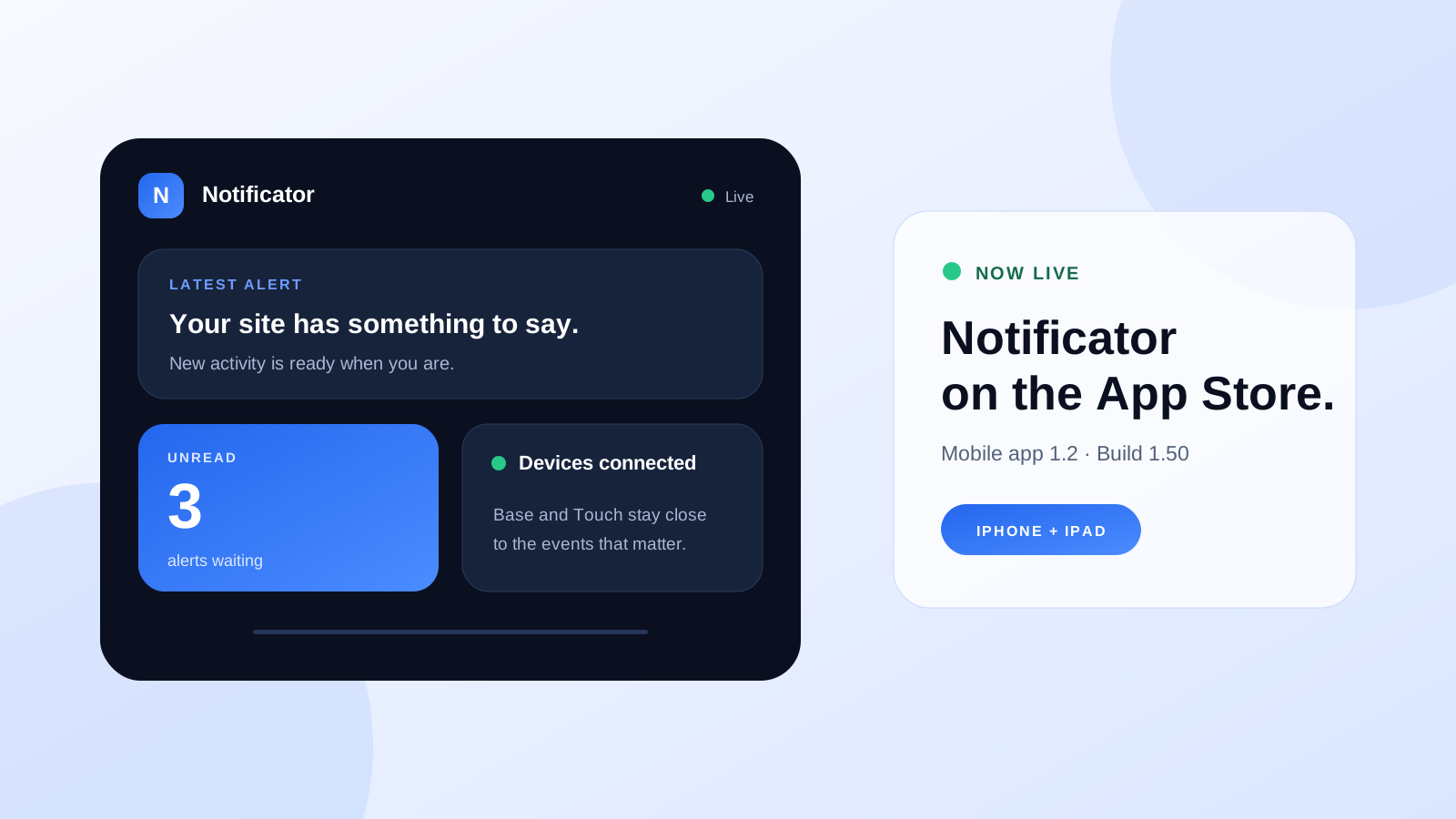
Notificator is now publicly available on the App Store. Version 1.2, build 1.50, can be downloaded today on iPhone and iPad.
Download Notificator from the App Store.
This is more than a listing update. The public release brings together the interface, delivery, device, and publishing work completed during the latest phase of the project.
A clearer everyday app
The most frequently used screens have been redesigned around the information people need first.
The Home screen now adapts more naturally to the sections each person enables. Recent alerts have clearer spacing and hierarchy, while the latest Journal story provides a useful path into project news without taking over the dashboard.
The Alerts screen makes unread activity more obvious and keeps search out of the way until it is requested. Swipe actions feel more natural, while the notification detail view separates the message, source information, useful metadata, and available actions more clearly.
Devices now have a cleaner overview, visible offline state, more readable status details, and model-aware editors. Base and Touch continue to expose only the settings their hardware supports, including brightness, volume, clock, weather, broker testing, and signed firmware updates where appropriate.
Settings and account controls that make more sense
Account settings, API keys, domains, security, and app preferences now share a more consistent visual language.
API-key cards are easier to scan, domain restrictions use a clearer editor, and integrations can request the correct key type, including the new Strapi Extension server key. App version and App Store build number are also controlled independently, so the version people see no longer has to mirror an internal build sequence.
The first-run experience is more resilient too. If someone declines push-notification permission, the app no longer treats that choice as a token-generation failure. Their account, email alerts, connected devices, and other app features remain available, and push can be enabled later if wanted.
Journal updates now come directly from the website
The News screen no longer depends on a manually maintained copy of project posts. It reads a small public Journal feed generated by the website, supports pagination, and keeps a local fallback so an unavailable or slow website does not delay the rest of the app.
The Home screen shows only the most recent story. Readers who want every update can open the full Journal screen, use the website’s new RSS feed, or browse the project changelog.
Built around optional connections
Notificator remains useful before every delivery channel is enabled.
WordPress dashboard alerts and local Strapi activity can work without a mobile account. The app adds a shared inbox, mobile push, optional email alerts, API-key management, and controls for compatible devices. MQTT remains connected through the user’s own supported broker account rather than a shared Notificator broker.
That separation is intentional: use the parts that help, leave the others disconnected, and keep ownership of the infrastructure that carries device messages.
Download the public release
Notificator mobile 1.2 is available now through its official App Store listing.
The Android release is still being prepared, so the website currently shows only the live Apple download. We will add the official Google Play listing when it is ready rather than linking to a placeholder.
This release gives the project a stable public mobile home. The next work will continue improving the app, expanding integration testing, and making the journey from a website event to a useful alert feel dependable across every supported screen and device.
Community discussion
Continue the conversation.